
Uttarakhand Halts Tree Felling as Chipko Movement Returns Amid Environmental Concerns
The Uttarakhand government has temporarily suspended the proposed felling of nearly 3,000 trees for the Rishikesh–Bhaniyawala four-lane highway project following widespread protests led by local residents, environmental activists, and community groups.
Chief Minister Pushkar Singh Dhami announced that no trees would be cut until a broader consensus is reached through dialogue with all stakeholders. The decision comes after demonstrators revived the iconic Chipko Movement, embracing trees to prevent them from being felled and urging authorities to reconsider the project's environmental impact.
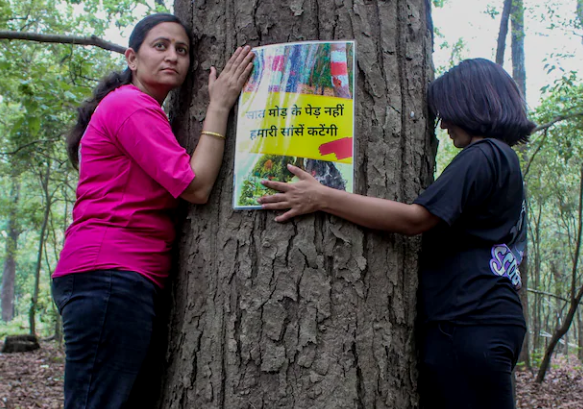
Citizens Raise Concerns Over Forest Loss
Residents from villages near the project corridor argue that large-scale tree cutting could worsen pollution, increase temperatures, and threaten the fragile ecosystem of the Shivalik region. Environmental campaigners warned that replacing mature forests is a long-term challenge and emphasized that development should be planned without causing irreversible ecological damage.
The proposed road expansion passes through an important wildlife corridor connecting Rajaji National Park, raising concerns about its impact on elephants and other wildlife.
Government Says Project Aims to Improve Connectivity
The National Highways Authority of India (NHAI) maintains that the ₹743-crore project is essential to improve connectivity between Dehradun, Jolly Grant Airport, and Rishikesh, while easing traffic during the annual Char Dham Yatra.
Officials said the road design has already been modified to reduce forest land acquisition, and several hundred trees have been identified for possible transplantation.
Tourism Growth Brings New Challenges
Uttarakhand has witnessed a sharp rise in tourist arrivals over the past two decades, placing increasing pressure on roads, forests, and public infrastructure. Experts believe that while improved transport networks support tourism and economic growth, they must be balanced with environmental conservation to protect the state's fragile Himalayan ecosystem.
Experts Warn Against Ignoring Ecological Risks
Environmental researchers have repeatedly highlighted the vulnerability of Uttarakhand's mountains to landslides, flooding, and soil erosion. Past incidents, including land subsidence in Joshimath, have renewed concerns about large-scale construction in ecologically sensitive regions.
Experts say extensive deforestation on steep mountain slopes can weaken soil stability, increase disaster risks, and affect water resources. They also point to the growing impact of climate change on Himalayan glaciers and river systems.
Sustainable Alternatives Suggested
Urban planners and environmental experts recommend exploring alternatives that reduce ecological damage, including:
Elevated road corridors to minimize forest clearance
Wildlife crossings for animal movement
Improved tree transplantation techniques
Environment-friendly engineering practices
Several countries have adopted similar infrastructure models to balance development with environmental protection.
Calls for Sustainable Development
The revival of the Chipko Movement has reignited the debate over balancing infrastructure development with conservation in Uttarakhand. Activists argue that future projects should prioritize environmental sustainability alongside economic growth.
The state government has indicated that discussions with local communities and experts will continue before any final decision is taken on the highway project.


Comments